by Teacher Jennie, Preschool Teacher & CCNS Director
“What is Carrot Time?” It’s a question we hear often and it’s one I struggle to answer quickly because Carrot Time is so many important things and so uniquely “CCNS”! If you have experienced the excitement of a preschool aged carrot passer in your home, you know the importance of the task! I am excited to share with you the reasons why Carrot Time is one of my favorite parts of the day at Cupertino Co-op Nursery School.
At CCNS, carrots are a big deal! Each day in our Preschool and PreK classes features a “Carrot Passer”. It looks a bit different in the Toddler Class, the Toddler Class version being the “Carrot Kid” which serves as a precursor to being the “Carrot Passer” in the year/s to come. While on the surface it may seem like a sweet, simple tradition (and it is!), the practice brings opportunities that involve more than you might think.
Routines in an early education classroom are a huge part of the learning environment. They provide comforting consistency and the opportunity to practice skills that those particular routines lend themselves to.
Routines in an early education classroom are a huge part of the learning environment. They provide comforting consistency and the opportunity to practice skills that those particular routines lend themselves to. Carrot Time is no different and provides a beautiful list of opportunities that we practice all year long! It all starts with this much anticipated song:
🎶 Our Carrot Passer today is
Roxie, Roxie, Roxie,
she has one carrot for this hand, and one carrot for this hand 🎶
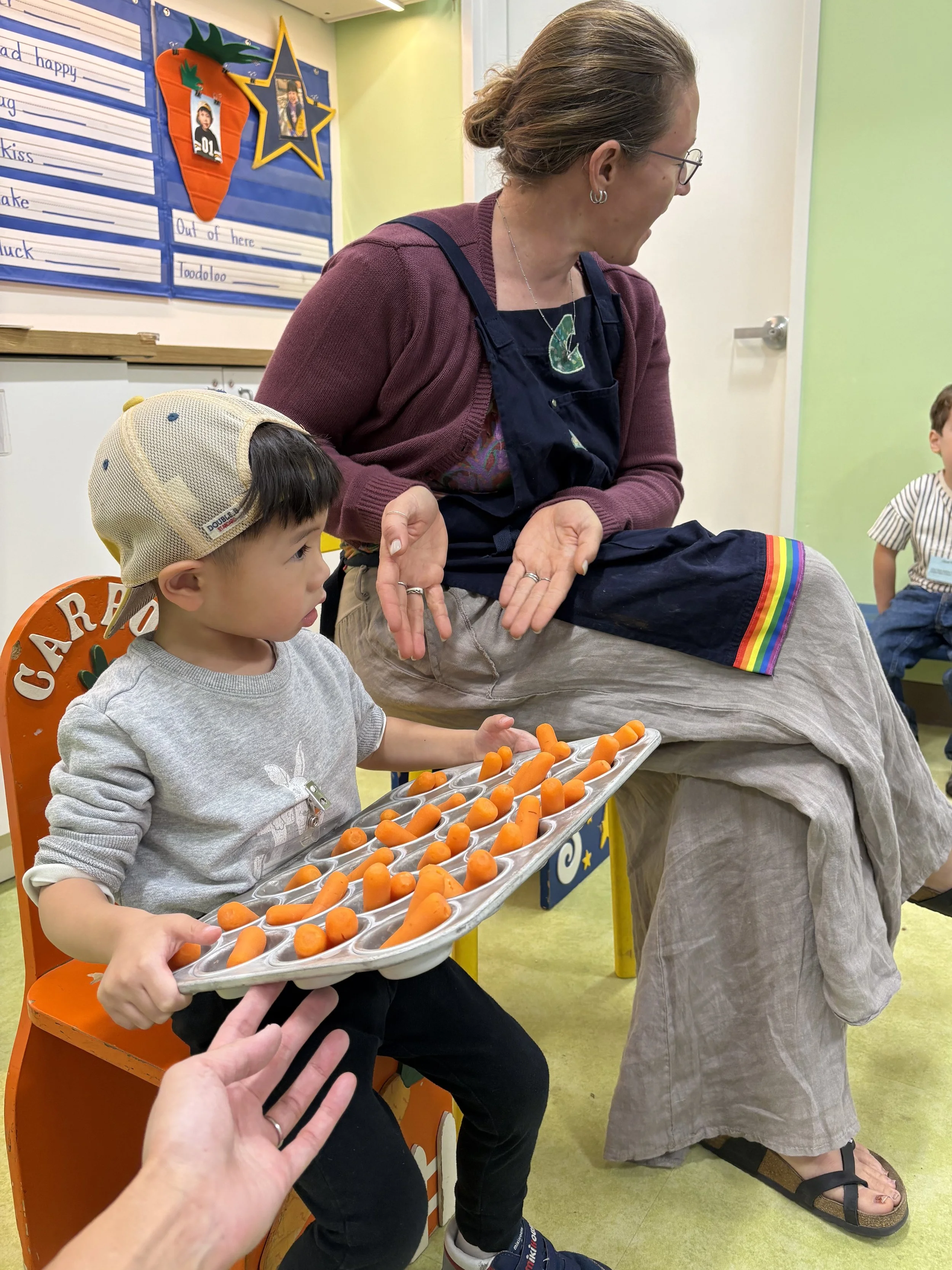
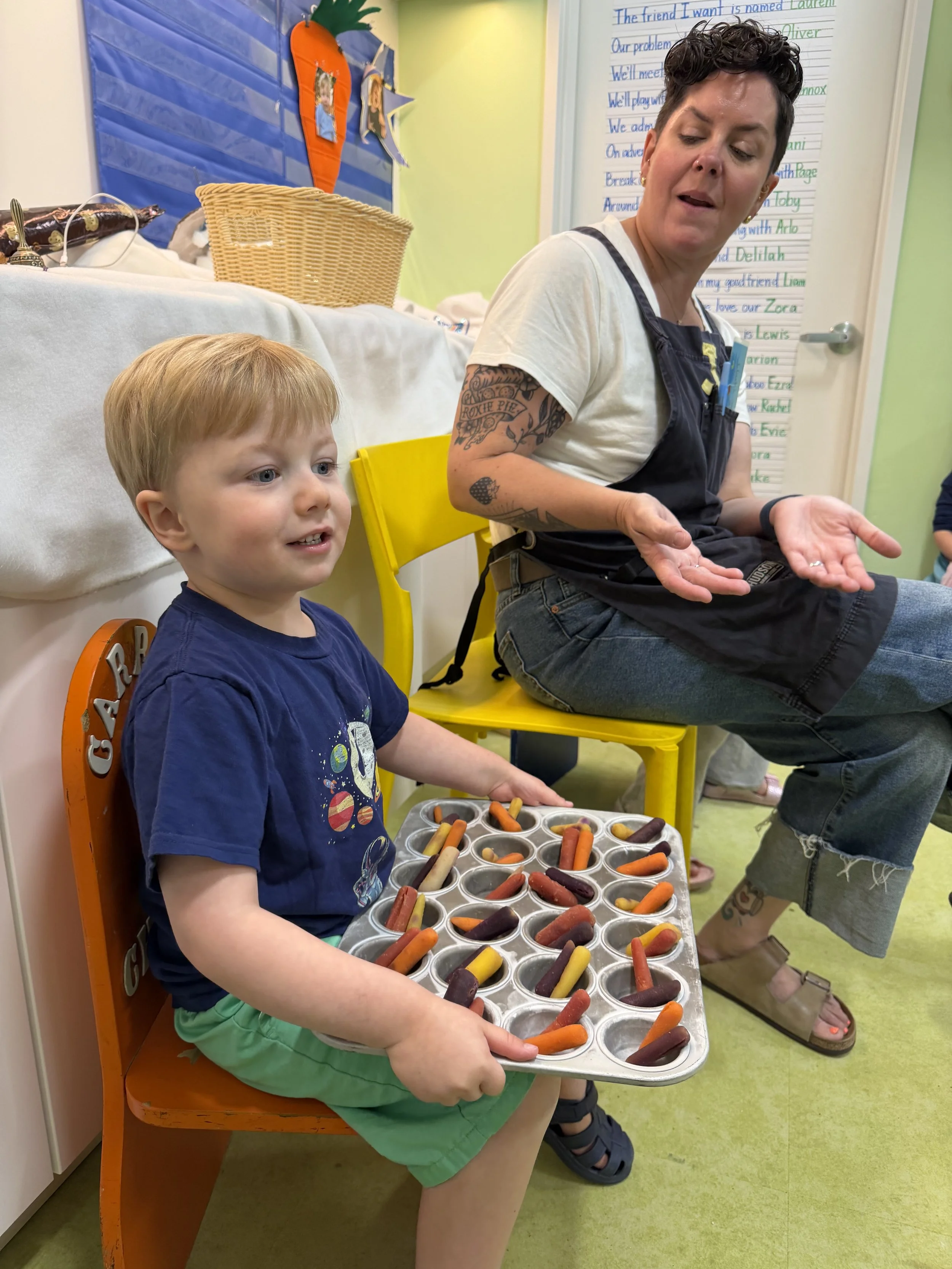
Each school day, a family prepares snack foods for the class. Along with snack foods for the class, they bring the very important baby carrots for Carrot Time (which are served steamed until all children in the class are 4 years old). The carrots are placed in the carrot tray in preparation for the end of day group gathering known as Carrot Time. The child whose family brings the day's snack sits in the Carrot Chair during group times that day and is known as “The Carrot Passer”.
Introducing the Carrot Passer to the class initiates the learning aspects that this daily routine brings both for the Carrot Passer as well as for the rest of the class.
During Carrot Time at the end of the day, we make the official announcement of our Carrot Passer for the day using the aforementioned Carrot Passer song. Upon announcing the Carrot Passer using the song, we declare what the song reminds us of (the carrot limit!)- 1 carrot for this hand & 1 carrot for this hand- they are welcome to take 1 or 2 carrots. This begs the question that is often posed by the children “What if we take more than 2 carrots- what if we take ONE HUNDRED carrots?” and provides the chance for us to talk about what the result would be- we would run out of carrots and not everyone would get some! We also take this chance to practice what a response to the offering of carrots can sound like- “Yes, please!” (if you do want carrots) or “No, thank you!” (if you do not want carrots). Now for the good stuff- what opportunities does this daily practice offer? Introducing the Carrot Passer to the class initiates the learning aspects that this daily routine brings both for the Carrot Passer as well as for the rest of the class:
For the Carrot Passer
WAITING: They have successfully waited! The Carrot Passer has been waiting for their turn to be the Carrot Passer! Depending on the class this wait is anywhere between 6 & 8 weeks. While waiting they have been observing the routines of the carrot passer and participating as carrots are offered to them each day.
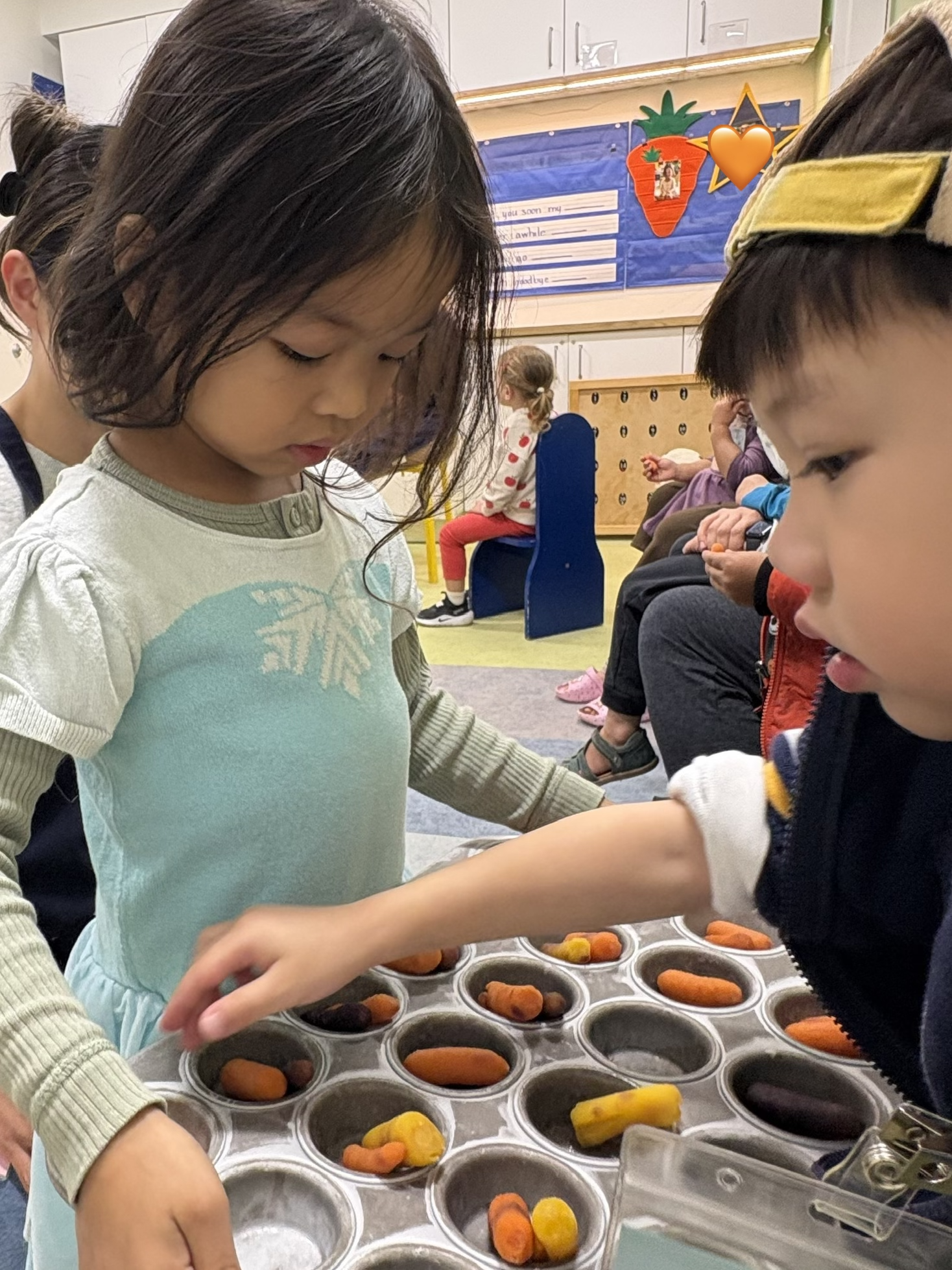
MATH SKILLS PRACTICE: The task of the Carrot Passer is to offer carrots to each classmate one at a time, one after another, all the way around the room, offering practice with one-to-one correspondence. Depending on the class, the number of carrots for each hand may vary, presenting practice with addition skills as the class determines how many carrots are available for each hand that day and ultimately how many carrots in total that is.
This predictable routine offers them the opportunity to engage with this task several times over the year as their skills and comfort grow.
LANGUAGE PRACTICE: Each interaction brings language practice as they pose a question at the level they are ready for to their classmates. This offering looks different based on each child and their particular language skills and/or comfort with direct communication. This predictable routine offers them the opportunity to engage with this task several times over the year as their skills and comfort grow. The offering looks many different ways depending on the child:
Non-verbal Offer: Sometimes standing in front of each classmate one-by-one and quietly holding the carrot tray is the offering that they are ready for. With this quiet offering they get feedback each and every time a classmate responds to the suggested carrot offer by either taking carrots or declining.
Verbal Offer with the Key Word: Sometimes approaching each classmate, proudly exclaiming the key word “Carrots” and then observing the response is the right fit method for them. Their grasp of the key word of the task, coupled with the response from their classmate with each offering validates their understanding of the task.
Verbal Offer in a Full Sentence: Sometimes practicing posing a full question is appropriate. Asking “Would you like carrots?” and then receiving a response over and over as they make their way to each classmate is invaluable reciprocal language practice as their question is met with a response over and over again.
PERSERVERANCE: Being the Carrot Passer requires attention and focus as they continue making the offer until they have offered carrots to all of their classmates. This task requires stamina and attention to continuing their job while there are interesting things happening all around them, including a story being read that they would love to sit and enjoy along with their classmates- were it not for their task of following through with their important job!
For the Rest of the Class
WAITING: While the Carrot Passer executes their job, their classmates wait for the carrots to be offered to them (as a story is being read by the teacher). Depending on where they are sitting in the room, this wait may be short or they may need to wait quite a bit longer as the carrots are offered one by one until they get to them. If they move to a different spot, they may miss the offering of carrots so staying in one spot is key to this part of the routine!
LANGUAGE PRACTICE: When the carrots are offered to them each child practices responding to the offer. This looks different depending on temperament and language skills:
Non-Verbal Response: Communicating their response non-verbally by nodding their head yes or shaking their head no.
Verbal Response: Stating “Yes” or “No” as their response to the carrot offer.
Verbal Response with a Pleasantry: Declaring their response with “Yes, please” or “No, thank you”.
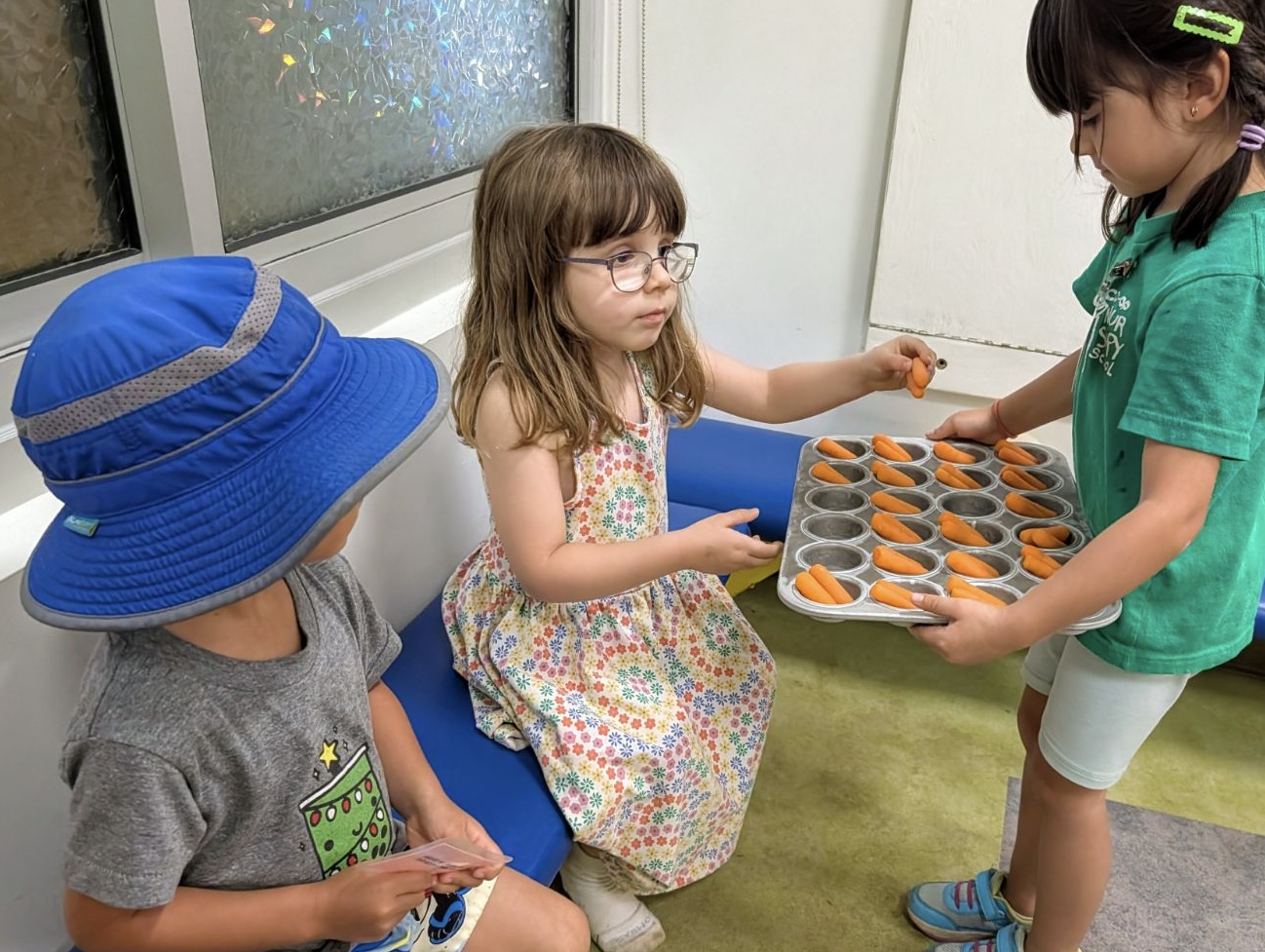
Hearing others use pleasantries and practicing using them (as their language skills allow) in response to an offer brings positive normalizing of kind responses to a kind offer.
MANNERS: Hearing others use pleasantries and practicing using them (as their language skills allow) in response to an offer brings positive normalizing of kind responses to a kind offer.
REPEATED FOOD EXPOSURE
We often think of peer pressure in a negative light but in many scenarios it can serve as a positive influence and this is one of those cases. Repeatedly being offered a vegetable in a low stakes but socially connected context creates a positive experience and a greater likelihood over time for children to try the offered vegetable. All of those offers through the year support the eventual addition of a new food to the repertoire of children who may not already enjoy eating carrots. Bonus- many parents enjoy knowing that their child has potentially eaten at least some vegetables that day!
GROUNDING SENSORY INPUT: Carrots are often steamed by the snack family ahead of time, then placed into the carrot tray and kept in the refrigerator during class until their big moment. This means the carrots are usually very cold when served, which provides a unique sensory experience that becomes associated over the course of the school year with the feeling of settling down for a story time. Holding carrots gives children something to do with their hands, and the process of chewing and swallowing helps children stay quiet long enough to be drawn in by the beginning of the story. The carrots themselves provide everyone with a just-right burst of hydration and nourishment at the end of a long day at school. Overall, the entire carrot time experience is highly regulating for most children.
IMPULSE CONTROL: All of this positive focus on carrots means that often CCNS kids LOVE carrots (at Carrot Time anyway!).
The Carrot Limit: The repeated practice of taking 1 or 2 carrots so there are enough for everyone is beneficial as children are building this incredibly important skill of hearing a limit and following the limit in an environment where we know that this is a skill that is growing- perfection is not expected- we are practicing this skill!
The Carrot Chair: The Carrot Chair is a coveted seat in the classroom. We honor the Carrot Passer by reserving that seat for them on their day to pass out the carrots. This practice of not sitting in that chair unless it is your day to be the Carrot Passer is practiced by everyone as they excitedly wait for their day to come!
HANDLING DISAPPOINTMENT: When there are leftover carrots at the end of school, the Carrot Passer can offer them to friends on their way out after dismissal (the PreK class calls these “carrots for the road”). Sometimes, these extra carrots run out before everyone has had a second helping, and different children display varying levels of sensitivity to missing out. This leads to valuable opportunities for supporting children through their negative emotions in a relatively low-stakes environment.
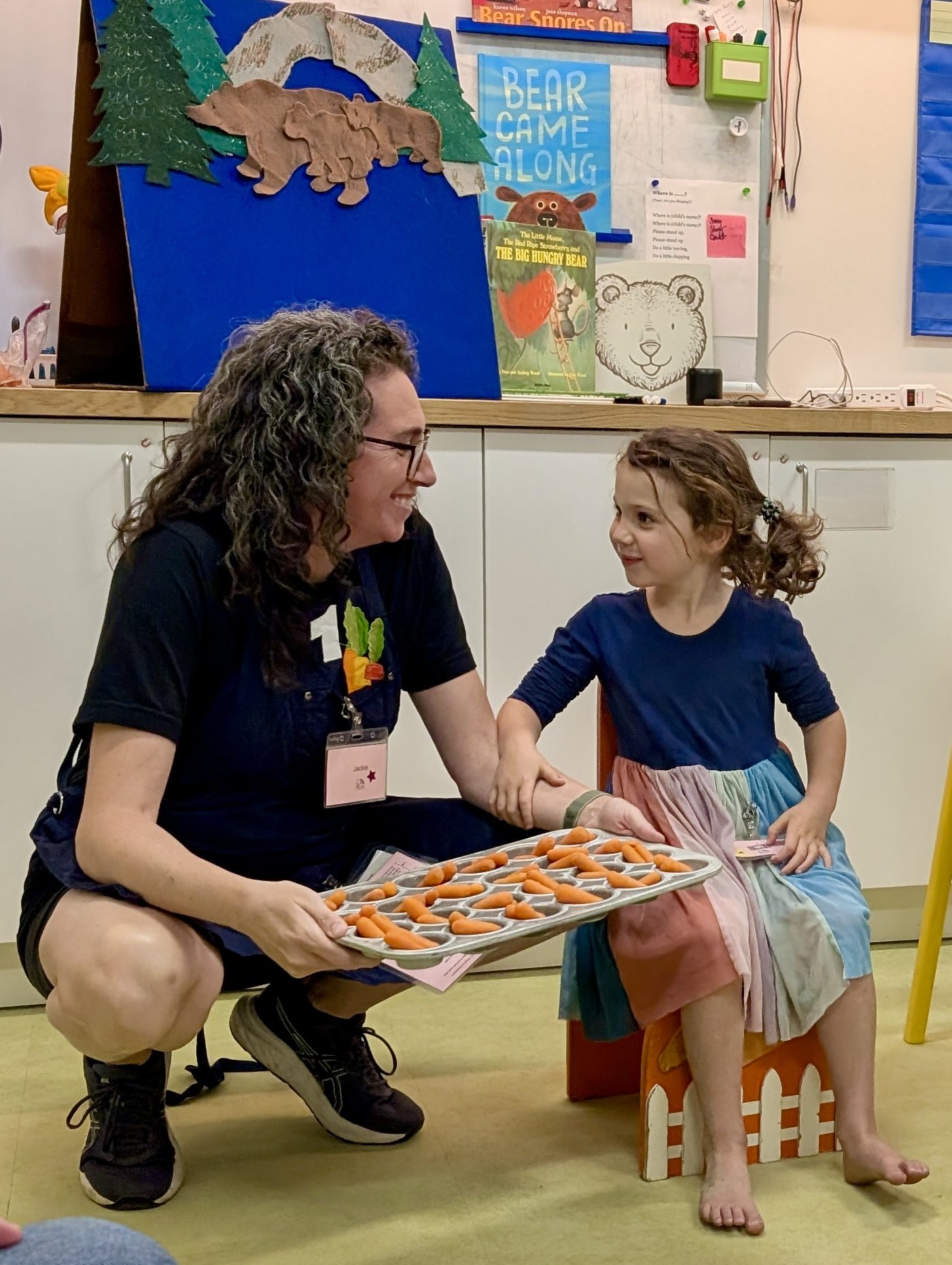
It’s a routine loved by many and it is FULL of that beautiful, intentional kind of learning that is worth its weight in gold (or carrots!?).
At CCNS, each school day is complete once the carrots have been passed out and we finish that final storytime of the day in community together. It’s a routine loved by many and it is FULL of that beautiful, intentional kind of learning that is worth its weight in gold (or carrots!?).