The Mud Kitchen: What Is It Good For?
By Calla Trofatter, PreK Class Teacher
My daughter was playing in the mud kitchen at school. She was pretending to be a chef, and as I took this picture she announced, “I'm making your dinner spicy. I know you like spice in your food. The flowers are the spice!”
I think she had forgotten that she was also a giraffe. Or maybe she was a giraffe chef. Who am I to say?
Superficially this was just some messy outdoor pretending, easy to dismiss as frivolous child’s play. But as savvy parents and educators know, a closer look can reveal the enormous amount of learning going on.
What is a child actually learning in the mud kitchen?
Physical Development
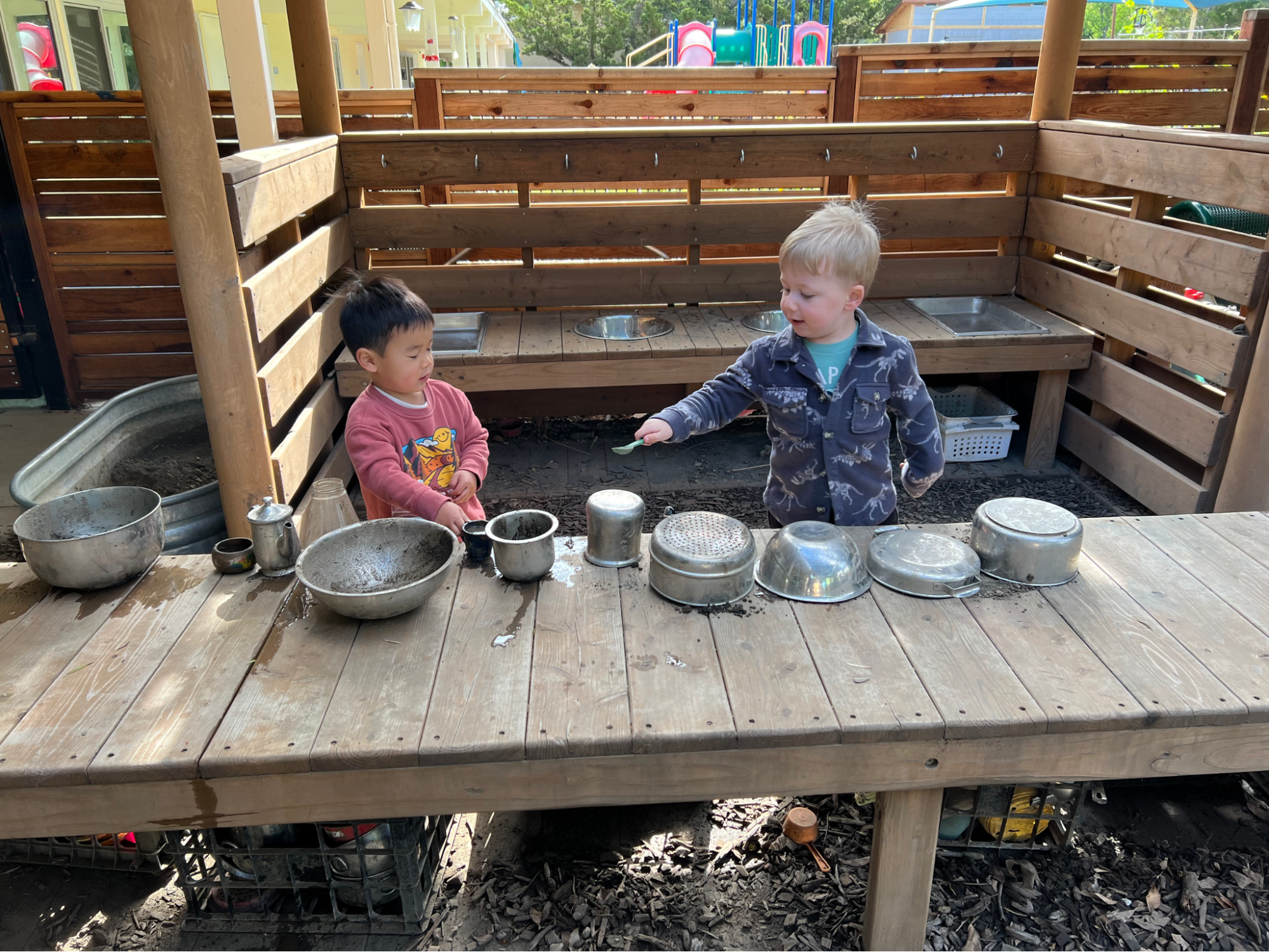
A mud kitchen is an unexpectedly rich environment for physical development. Children lift and carry heavy loads of dirt and water, crouch and reach for ingredients, pour, scoop, stir, sprinkle, pinch, and spread. They're developing fine and gross motor skills along with hand-eye coordination, bilateral coordination, balance, body awareness (proprioception), and motor planning abilities.
They're also taking in information through multiple senses at once and coordinating that input to guide their next actions. This kind of multi-modal integration helps children build and strengthen the neural pathways they’ll use for every academic and cognitive task in their future.
There’s even something to be said for playing outside in the dirt itself – exposure to the natural microbial environment can support the development of a healthy microbiome. Ask any parent or teacher to extol the benefits of a robust immune system! And spending time outside interacting with natural materials has been demonstrated to reduce anxiety, increase sleep quality, and improve moods, all of which play a crucial role in a child’s ability to learn and grow.
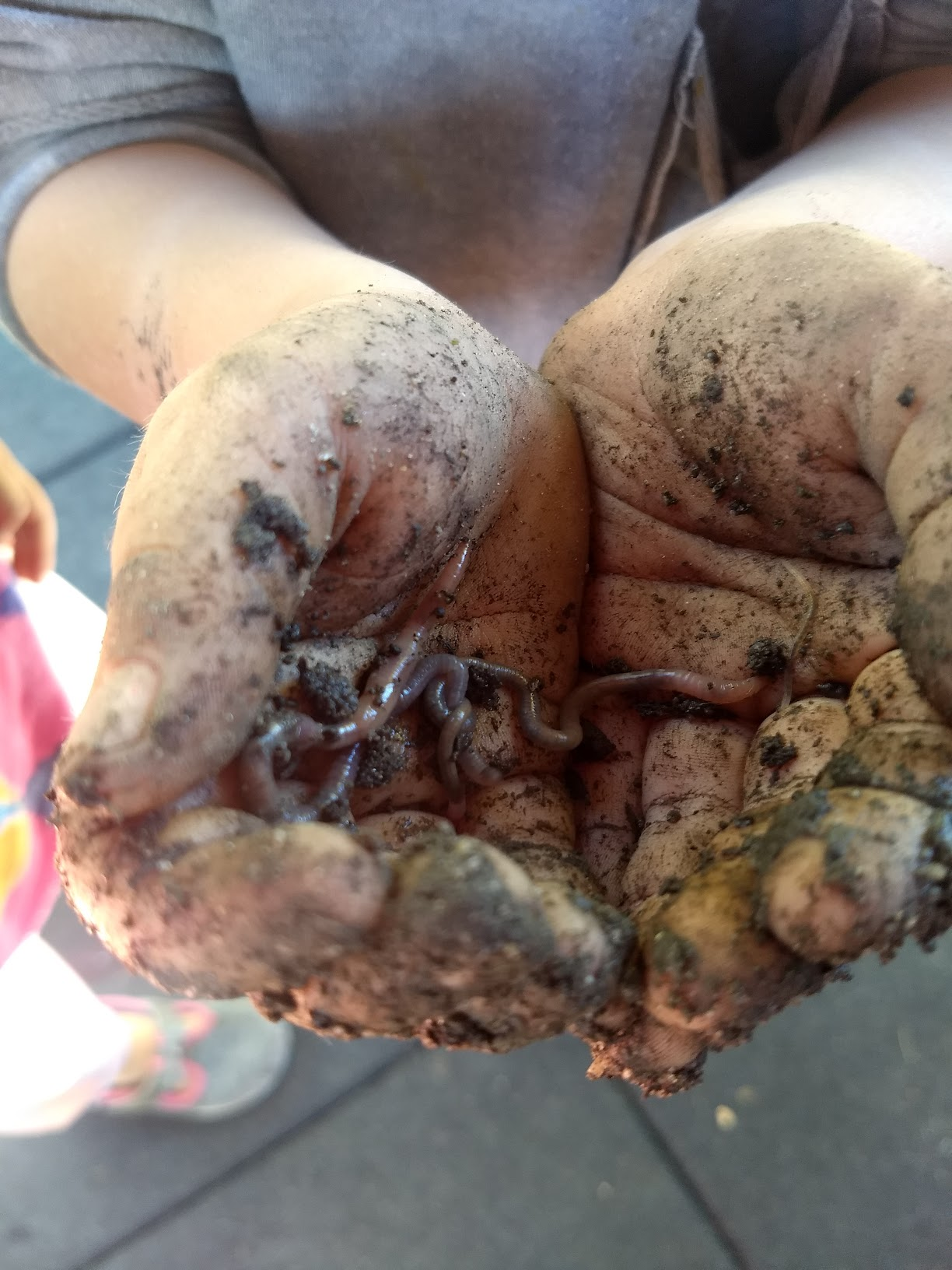
A mud kitchen is an unexpectedly rich environment for physical development.
Emotional Development
Mud kitchen play can also foster crucial soft skills like persistence, focus, flexibility, and self-regulation. When a person gets to select and direct their own activities based on their genuine interests, reasons to persevere in that activity come for free. This is called intrinsic motivation, and it’s strongly linked with academic success. With no one telling you what to do or how to do it, you get to experience the satisfaction of solving your own problems, the independence of making your own decisions, and the pride of seeing your ideas become reality.
What happens when the bowl tips over? How much water should I add? Why isn't my mud the right consistency? Where can I find another flower? Why won’t that stay where I put it?
When a child is in charge of their own vision, they learn that their choices and efforts can have a meaningful impact on the real world. That builds competence, and competence nourishes a positive and confident self-concept for years to come.
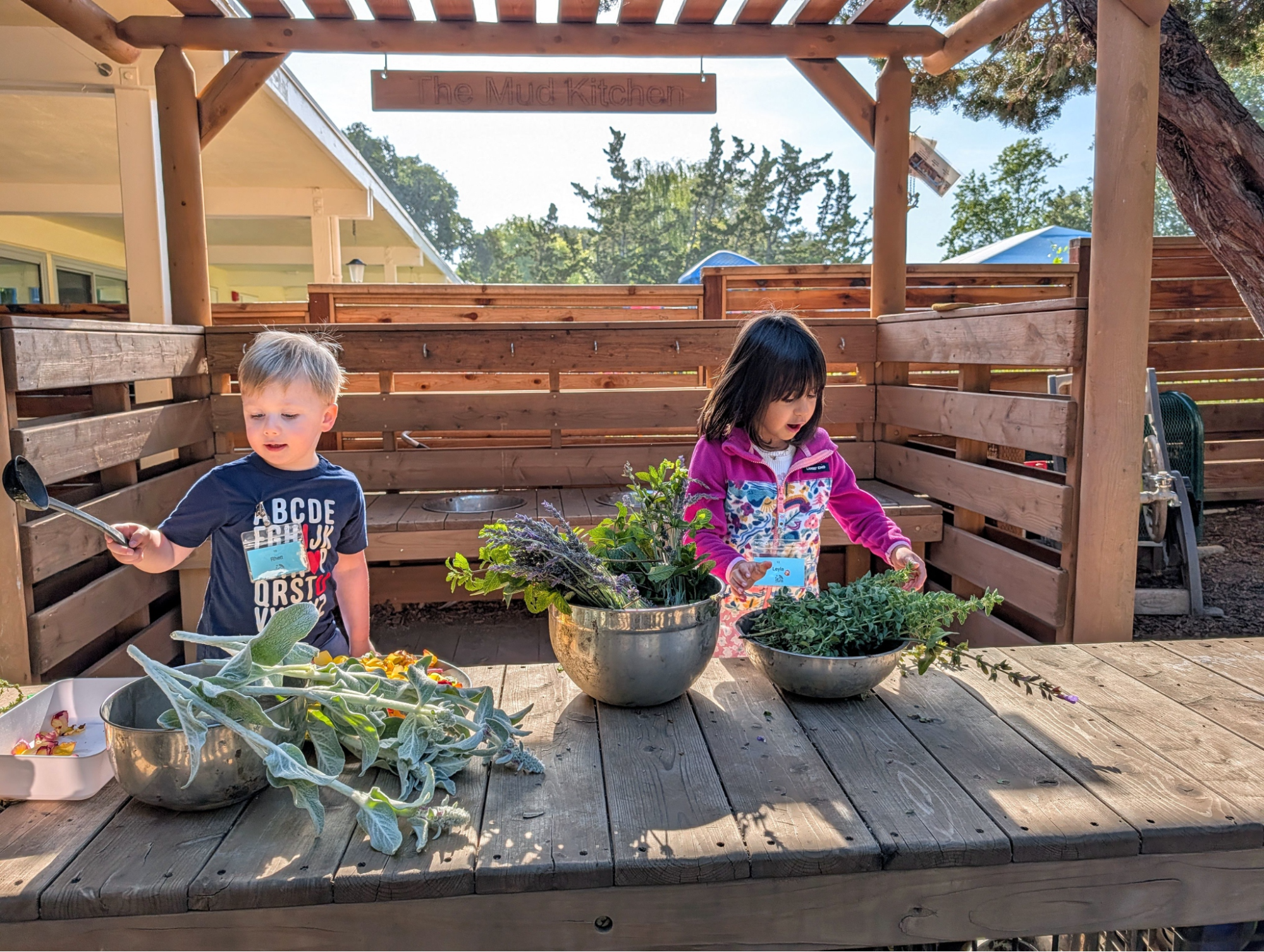
Mud kitchen play can also foster crucial soft skills like persistence, focus, flexibility, and self-regulation.
Social Development
Through pretend play, children experiment with how people relate to one another and how the world around them works. By imagining themselves to be a chef, customer, server, delivery person, (or apparently a giraffe chef), children are learning how to participate in and contribute to their community. They also gain access to opportunities for communication and cooperation as they take orders, ask what others like to eat, negotiate roles, wait for their turn, explain what they're making…
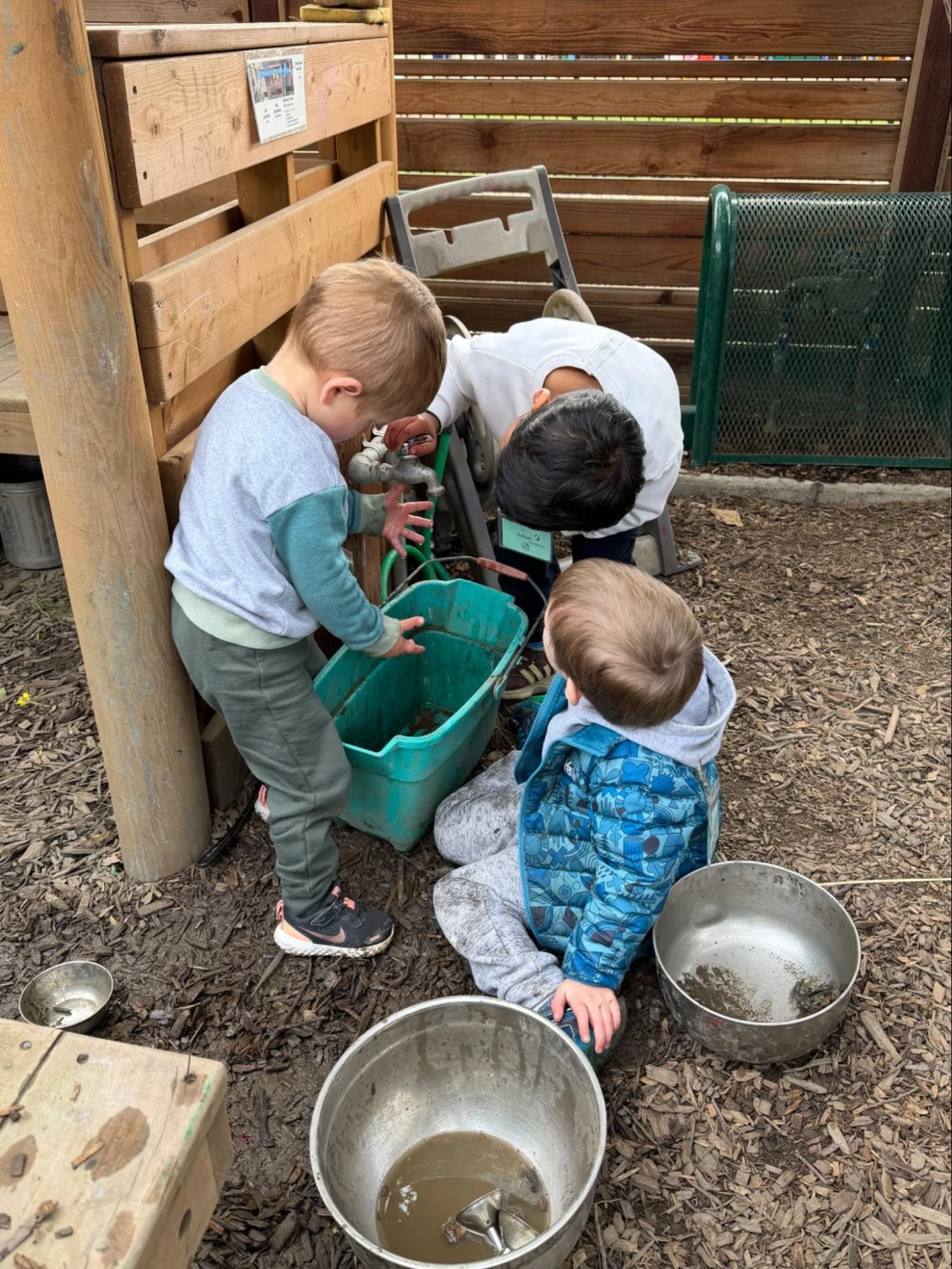
Through pretend play, children experiment with how people relate to one another and how the world around them works.
My little giraffe chef was also practicing perspective-taking – she wasn't just making spicy food, she was remembering that I like spicy food, even though she doesn’t. The ability to reason about the mental states of others is called Theory of Mind, and its emergence makes it possible to interact successfully with others, to develop empathy, and to build healthy positive relationships.
And the simple joy of doing for others cannot be discounted! It feels so good to offer someone a gift you’ve worked hard to make and watch their reaction.
The ability to reason about the mental states of others is called Theory of Mind, and its emergence makes it possible to interact successfully with others, to develop empathy, and to build healthy positive relationships.
Academic Learning! (language, math, science…)
Perhaps surprisingly, a wealth of academic learning goes on in the mud kitchen too! A child playing in a mud kitchen might:
Build vocabulary by naming ingredients, tools, textures, and techniques…
Practice storytelling by describing what she's making and creating a narrative around it…
Explore math by counting scoops, comparing amounts, and measuring ingredients…
Compare and contrast, notice patterns and differences, practice one-to-one correspondence (How many bowls do I need to serve 4 people?)...
Engage with the scientific method by:
Testing hypotheses (If I add more water, the mud will change texture...)
Making predictions (What will happen if I add more sand on top?)
Interpreting observations (This bowl and this cup are different shapes, but they hold the same amount of water, so maybe they’re the same size...)
Manipulating variables (I’ll put sand in this one and dirt in this one…)
Investigate concepts of physics like cause and effect, gravity, mass, volume, physical changes, the properties of different materials…
Expand their working memory by holding one or more elements in mind while engaging with an unrelated task…
In other words, children are busy creating the foundations of language, literacy, numeracy, scientific reasoning, and problem-solving, all without ever being asked to sit down and “do academics”.
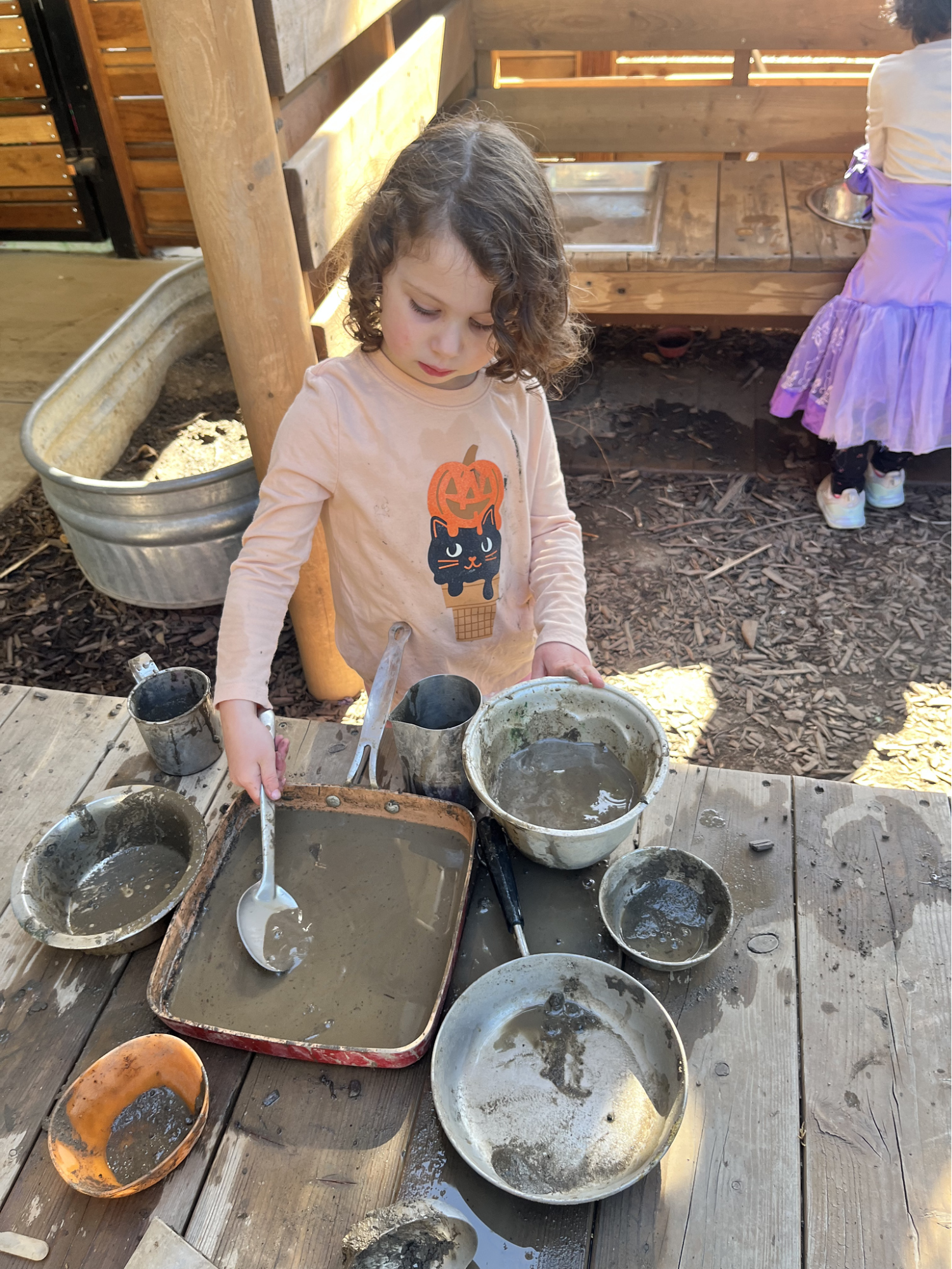
Perhaps surprisingly, a wealth of academic learning goes on in the mud kitchen too!
So what is it good for?
As countless experts in early childhood development have noted (both historically and in modern studies), play and learning aren't opposing forces – they are deeply interconnected. Play gives children time to become absorbed in something simply because it is interesting to them. They get to decide, to experiment, to fail, to try again, to notice things, to make connections, to follow an idea wherever it leads… Mud kitchen play specifically means kids get to be outside, interact with natural materials, use their imagination, and experience the satisfaction of becoming more capable. All of this matters!
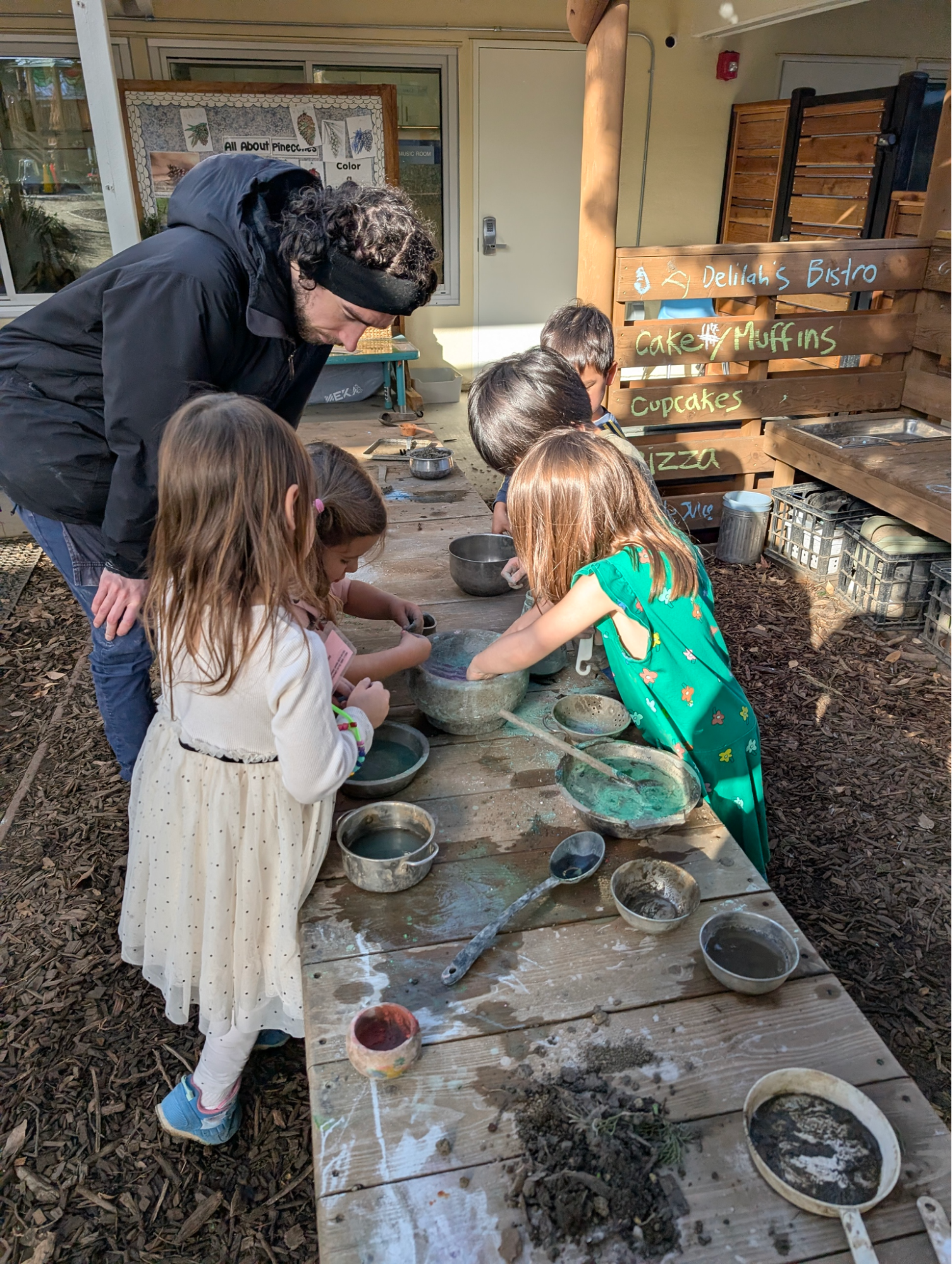
Play and learning aren't opposing forces – they are deeply interconnected.
Play is so fundamentally important to development that it is recognized internationally as a human right for children. Yet children in the United States are increasingly expected to trade uninterrupted, unstructured play for academic instruction at younger and younger ages.
At Cupertino Coop Nursery School (CCNS), our guiding philosophy is simple: playing is learning, and learning is playing.
We believe children learn best by doing. Real learning means making choices, taking risks, stumbling into mistakes, and figuring out what to do next. This process happens during meaningful playful experiences, and it takes time.
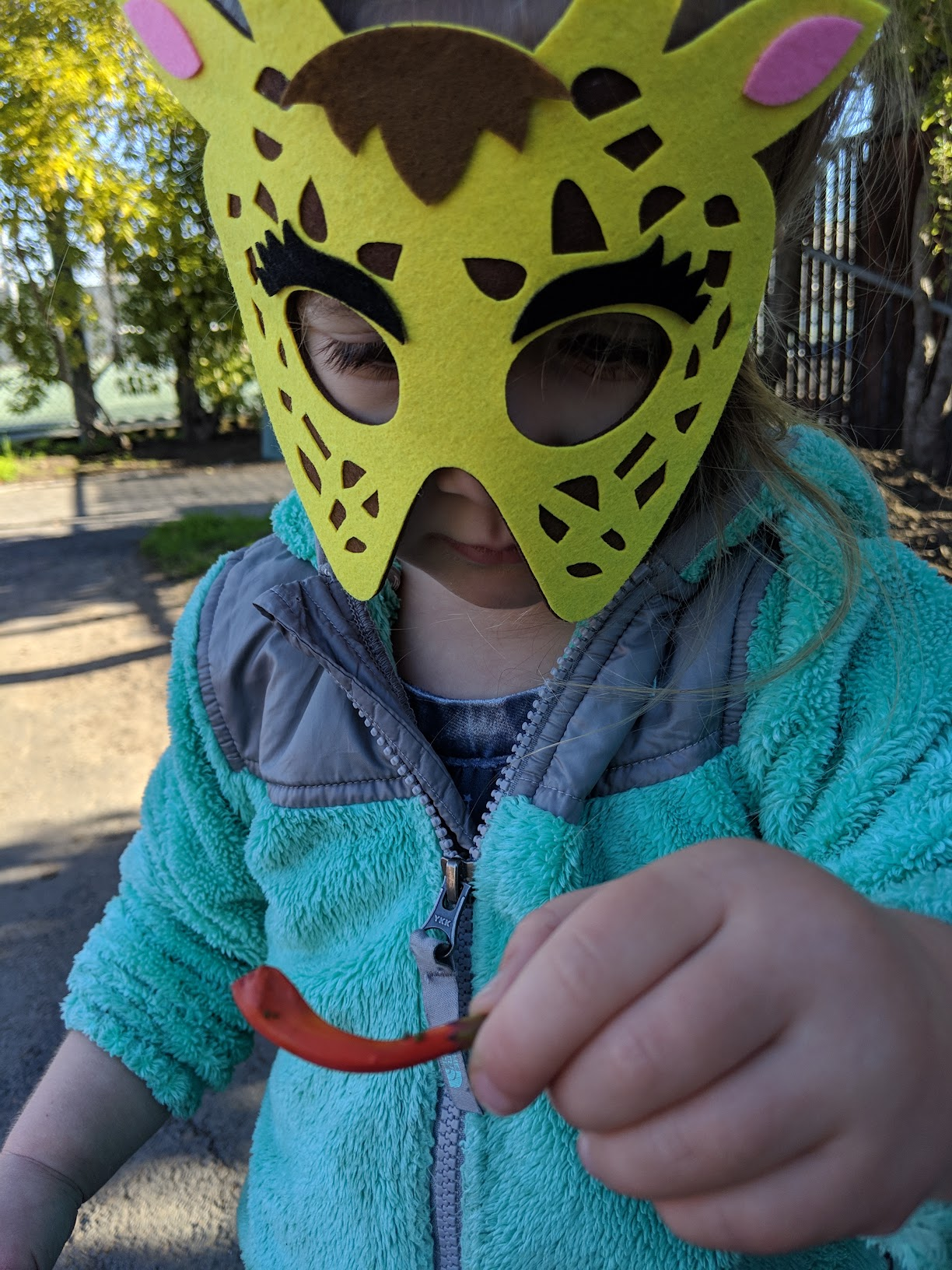
The day the giraffe chef photos were taken, my daughter stayed in the mud kitchen for 35 minutes.
The day the giraffe chef photos were taken, my daughter stayed in the mud kitchen for 35 minutes.
When you're three years old, 35 minutes of sustained, self-directed attention is a very. long. time.
For 35 minutes, she was deeply engaged. She was experimenting, imagining, communicating, moving, problem-solving, creating, remembering, observing, and connecting.
She was learning that her ideas matter. That she is capable of figuring things out. That her interactions with the world have meaning and value.
And she was doing all of that “just” by making spicy mud soup for Mom.
This is why we support and protect play.
Because playing is learning, and learning is playing.