Process Art
By Mona Alioglu Deligoz, PreK Class Assistant Teacher
I love art! I love observing and thinking about art, sometimes making an art piece, but what I love most is witnessing young children engage in artistic activities. Have you ever really watched a young child experience mixing colors or making marks on a piece of paper? It’s a fascinating process of learning, creating, imagining, feeling many emotions and being authentic.
That being said, what is art? The dictionary definition of art is “... a visual object or experience consciously created through an expression of skill or imagination.”
As we think about the development of children, art is an important aspect of whole-child learning. Not only does art become an outlet to express emotions and thoughts, it also acts as a learning opportunity in various domains such as cognitive and motor skills.
Process Art versus Product Art
Process art is a child-led, open ended and unique way of creating art that focuses on the process of art making instead of the finished product. It gives children the opportunity to explore and express themselves through their work. It can get messy and chaotic right alongside excitement and fun. Once you observe process art, you can almost feel the gears turning and neural connections happening in a child’s brain as they go. If you ask me to tell you the top three keywords that come to my mind about process art, they are: creativity, imagination and uniqueness. Although these keywords may sound simple or unimportant to some, they are the stars of the show in preparing children to learn many skills as they get ready to tackle the world and its obstacles as they grow up.
Children are provided various materials and tools they can use in process art. Depending on the child’s development level, age appropriate instruction on the technique can be provided briefly, but the whole art process is imagined and executed by the child’s creativity and preferences. Every art piece ends up being authentic and one of a kind- as each child is unique as well. Properties of process art:
Completely child-led, no step-by-step instructions
There is no failure, no right or wrong way to execute
Focused on experiencing materials, tools and techniques
Every art piece is unique and completely depends on the child’s choice and development level
Joy of creating and learning
While process art is often described as relaxing, it can also have moments of frustration as children try to match the materials to their visions and imaginations. This is a valuable opportunity to help children practice problem solving and critical thinking skills.
While process art looks great, this doesn’t mean that product art is “evil” and we should refrain from that. In fact, certain elements of product art can be beneficial when used intentionally as children age and move on to grade school level and above. Projects combining process and product art techniques can benefit older children as they practice essential skills like following instructions and accurately replicating models in an age-appropriate way.
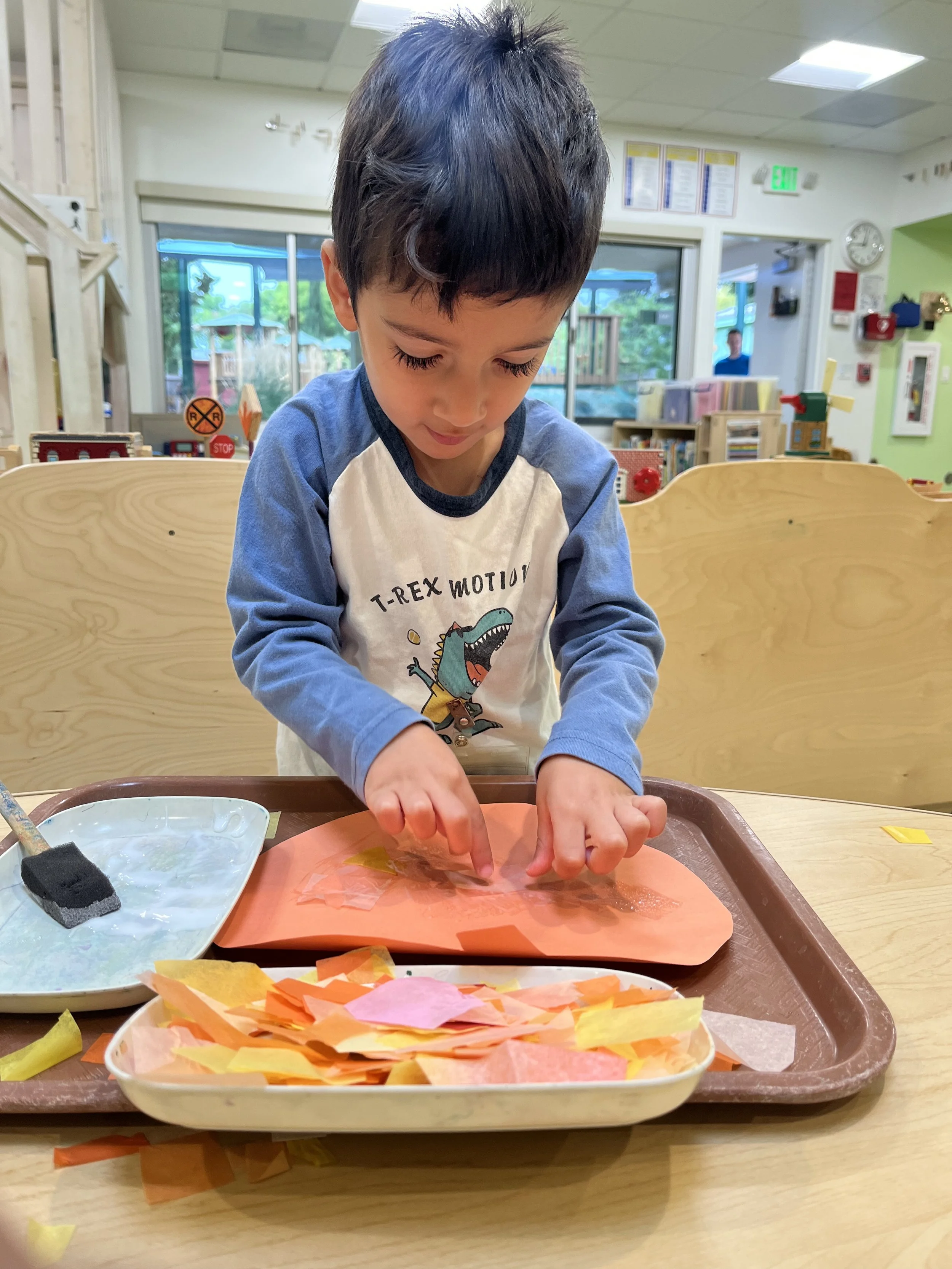
This pumpkin craft is a perfect example of process art: it is child-led, there is no right or wrong result, the children can experience the tools/techniques freely, and every resulting piece is unique. They can create with freedom and joy!
In short, if you glance at an art piece and can say, “Oh, you made ______,” then most likely it is product art. Product art is when the end product is expected to look in a certain way and the children are supposed to follow instructions step-by-step. Maybe you’ve seen a wall of children’s art displays that have pieces that look exactly like each other, almost impossible to tell which one belongs to who. That’s product art! The end product is the most important thing and there are strict instructions to get to that goal. These art pieces are planned by adults, and require specific skills and techniques. In a school environment, children mostly have to stop what they’re doing to participate. Properties of product art:
There is a right or wrong way to work, clear signs of failure
Step-by-step instructions are provided by adults
Little to no room for imagination and creativity
A set finished product is expected of everyone,
Frustration, anger or boredom can often be present
Comparison to peers products may result in negative emotions
The Benefits of Process Art
Children learn by playing. They need to explore, experience, observe and act to practice and learn new skills. When we think about product art, there are natural limits to learning experiences, especially for young children since every single step is expected to happen in a certain way. Now think about process art. Imagine a young child is given a piece of paper, a glue bottle and some craft gems. They first learn what open and close means, how to open the glue bottle. They are working hard to squeeze glue on the paper, which can actually be tricky since it requires a certain amount of fine motor skills. Once the glue hits the paper, they touch it, learn what sticky means. Maybe they squeeze too much glue and it looks like a meaningless blob but then they try adding gems on their paper. How deep do the gems go into the glue? Does the glue cover the gems? What if the child does not want to glue to cover the gem? How can they solve this problem? Are they going to spread the glue or stack another gem on top of the other, or maybe they will come up with another solution? This simple art activity suddenly turns into a complicated learning moment that requires multiple skills. That’s the beauty of process art!
When process art is set intentionally by the grown ups in an age appropriate way, we see various benefits for children.
Social and Emotional: Process art usually takes place in communal settings where multiple children experience their own version of art. They interact with each other, observe each other's work and how everyone uses materials and tools. Depending on the art project, children can practice negotiating, sharing and working together as they develop their own aesthetic preferences. Sharing is usually perceived as sharing of materials and tools. Another social aspect of process art in a social setting is the sharing of culture. Since art is a reflection of culture, it allows children to showcase their own culture as they engage in artistic activities. This leads to being exposed to other cultures through materials, tools, techniques and even language, bringing an appreciation of diversity. Since there is no “perfect” end product, our young artists don’t have to worry about achieving perfection and in turn experience less stress. They feel confident as they work on their own experimentation. When it comes to emotions, art is the perfect outlet. Especially with children who are not able to verbalize their feelings or do not have the necessary language skills. Art becomes another language for them through shapes, colors and textures. Considering how significant emotional fluency is for children, process art provides an invaluable tool.
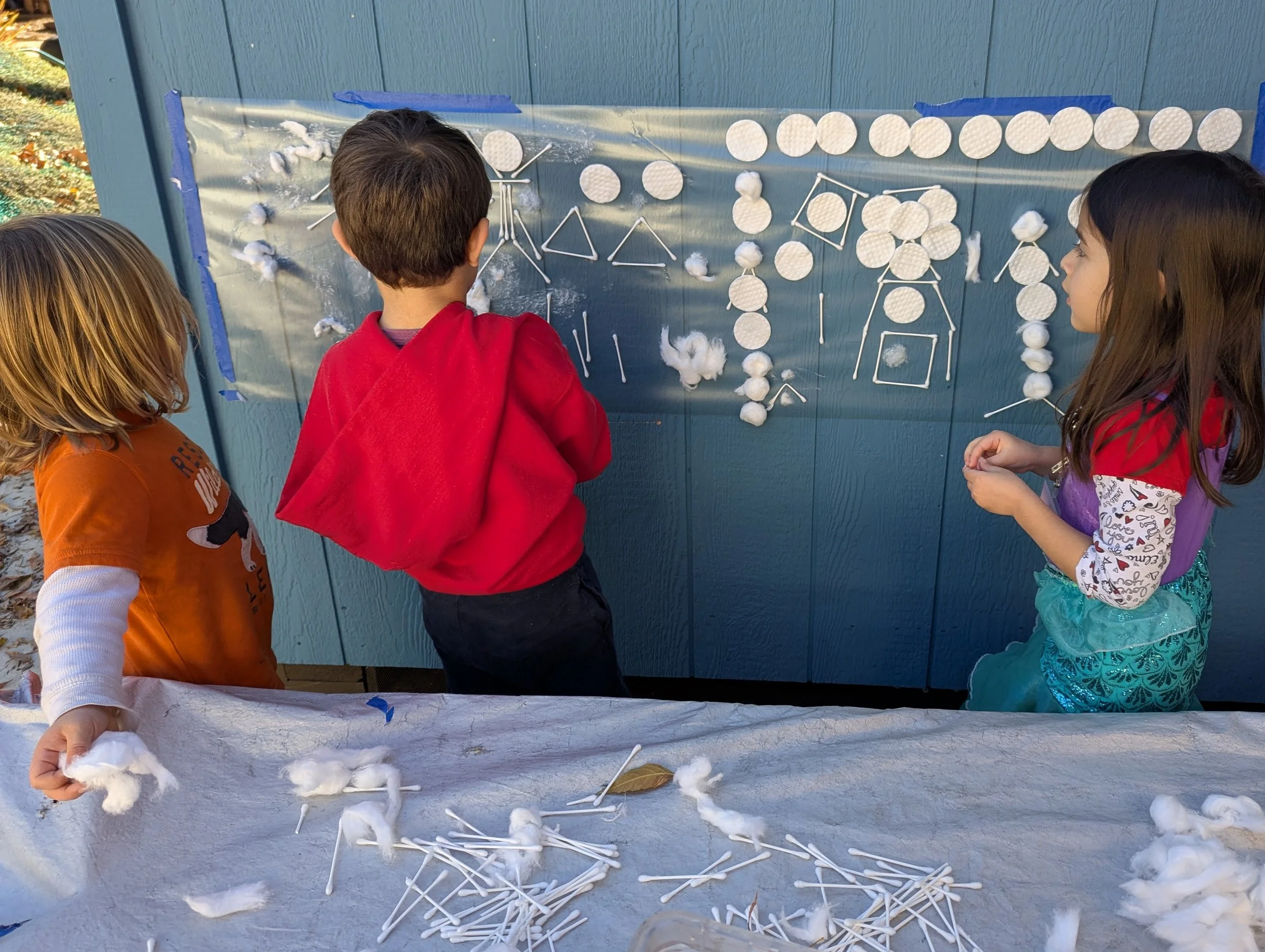
These children are discussing, negotiating, sharing, and learning and they create in a shared space with shared resources--this project uses contact paper and cotton balls, rounds, and qtips to make a wintery scene, or anything else they can imagine!
Language and literacy: When I mentioned emotional fluency earlier, it is important to realize that children expressing themselves through art is also a form of language practice. Children, especially young children, use art to tell us what they think, how they feel and develop their oral and written communication skills. For English learners, the benefits of process art can be even more crucial . The Familiarity, relaxed and calm nature of process art can be their anchor point, allowing them control and agency in an environment where they may not fully understand the language happening around them. Process art experiences provide a comfortable setting for practicing language skills and vocabulary building.
Cognitive: Think about a child who is just learning how to hold and use a brush. It feels weird in their hands, to make the brush go where they want at an angle that’s suitable to complete their vision. They are encountering new problems that require problem solving and critical thinking skills. Even when children practice with already familiar tools and materials, they still face new problems and challenges with every new art project. Process art is perfect to practice these problem solving skills and get creative in a low stress, open, child-led environment. With appropriate adult guidance through asking questions or making suggestions, children push their limits to get more creative and intentional with each art project. They think about the process and engage in more meaningful actions and connections.
Letting children get creative is helping them to get ready to face the challenges of the world as they grow up. In an adult world there are so many occasions each day to find creative solutions to various problems. Process art lets children practice creativity, critical thinking and problem solving skills to nourish their cognitive growth.
Physical: Holding a pair of scissors, using a brush, squeezing a glue bottle, molding clay or playdough, working with ink stamps, peeling, cutting and placing tape and holding markers/pencils are all great ways to practice fine motor skills. Not surprisingly, to engage in artistic endeavors, children need to use their fine motor skills almost all the time. What about gross motor skills? What happens when we move process art outdoors? When children use big brushes to paint a large piece of cardboard, use their feet to make marks on a rolled out butcher paper, stretch themselves to reach spots or move around to paint standing up, they use their gross motor skills. What a joyful way to practice skills that they will need throughout their whole life!
One of my favorite process art offerings is the outside plexiglass double sided easels in the CCNS backyard. I love watching children discover that they can interact with the other side of the easel from their side to make art. They take turns to complete each other’s paintings from their side and create a wonderfully collaborative new art piece. Can you think of the skills they practice as one child draws clouds on one side of the easel and the other child adds a sun from the other side and then moves on to add trees, rain drops and so many other things to their social project? They run from one side to the other to check out how different it looks from each side and how colors interact with each other all the while talking among themselves to plan or problem solve. Truly fascinating!
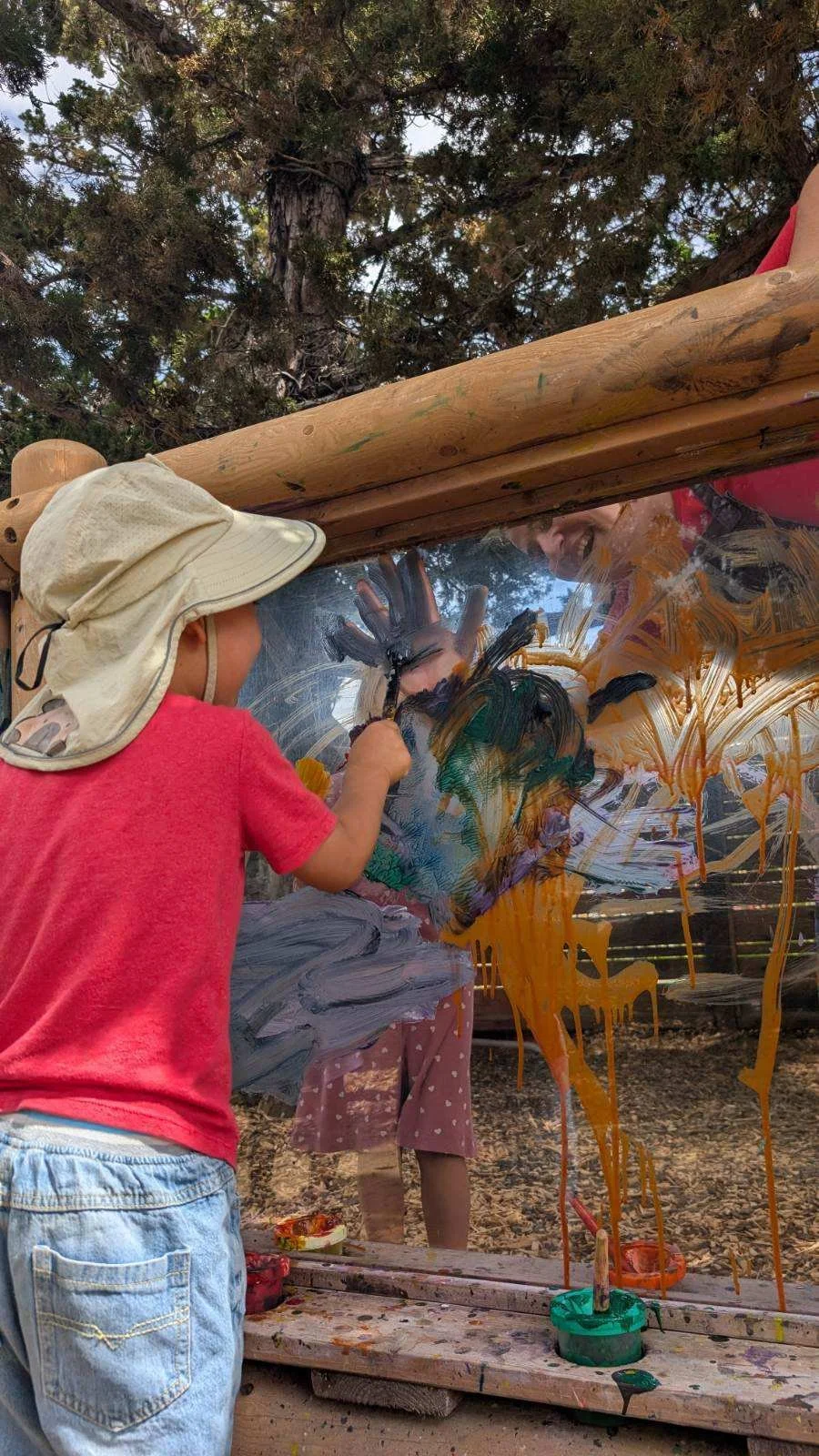
One of our Pre-K students interacting with the teacher through the see-through easel--she holds her hand up on one side, and he paints over and around it on the other!
Tips for Providing Process Art Experiences
If you want your child to experience process art at home, here are some suggestions:
Offer various simple materials, no need to buy fancy and expensive materials and tools
Invite your child to explore the materials and tools
Allow your child to decide what to do (I know, this is the hardest part for grown ups!)
Make short comments about their process and ask meaningful questions to learn more about their thought process
Extend the experience and connect their creativity with other areas to support the learning process
To sum it up, process art is a form of art that helps children to get creative, innovative, practice many skills, express themselves in nonverbal ways and create a sense of personal and cultural identity in a fun, relaxed and satisfying way. Children get to experiment with the process itself in a hands-on manner to facilitate learning and development in multiple areas.
Bonus: My Favorite Process Art Project
Marble painting! Always a favorite for all ages- from little ones to older kids marble painting is an easy process art project to do at home too.
Materials:
A box that’s comfortable for your child to hold.
A marble or golf ball
Tempera paint (1-3 colors work best)
Paper that can fit inside the box
Instructions:
Place paper in the bin and invite your child to explore.
Show them how the marble/golf ball moves when the box is tilted to one side and the other side.
Ask them to pick a color and squeeze a marble size paint onto the middle of the paper.
Let them explore! Add more colors as they go to introduce color mixing.